Yards Free of Visible Stumps
Stump Grinding in Flowood for properties with stumps that interfere with lawn maintenance and landscaping
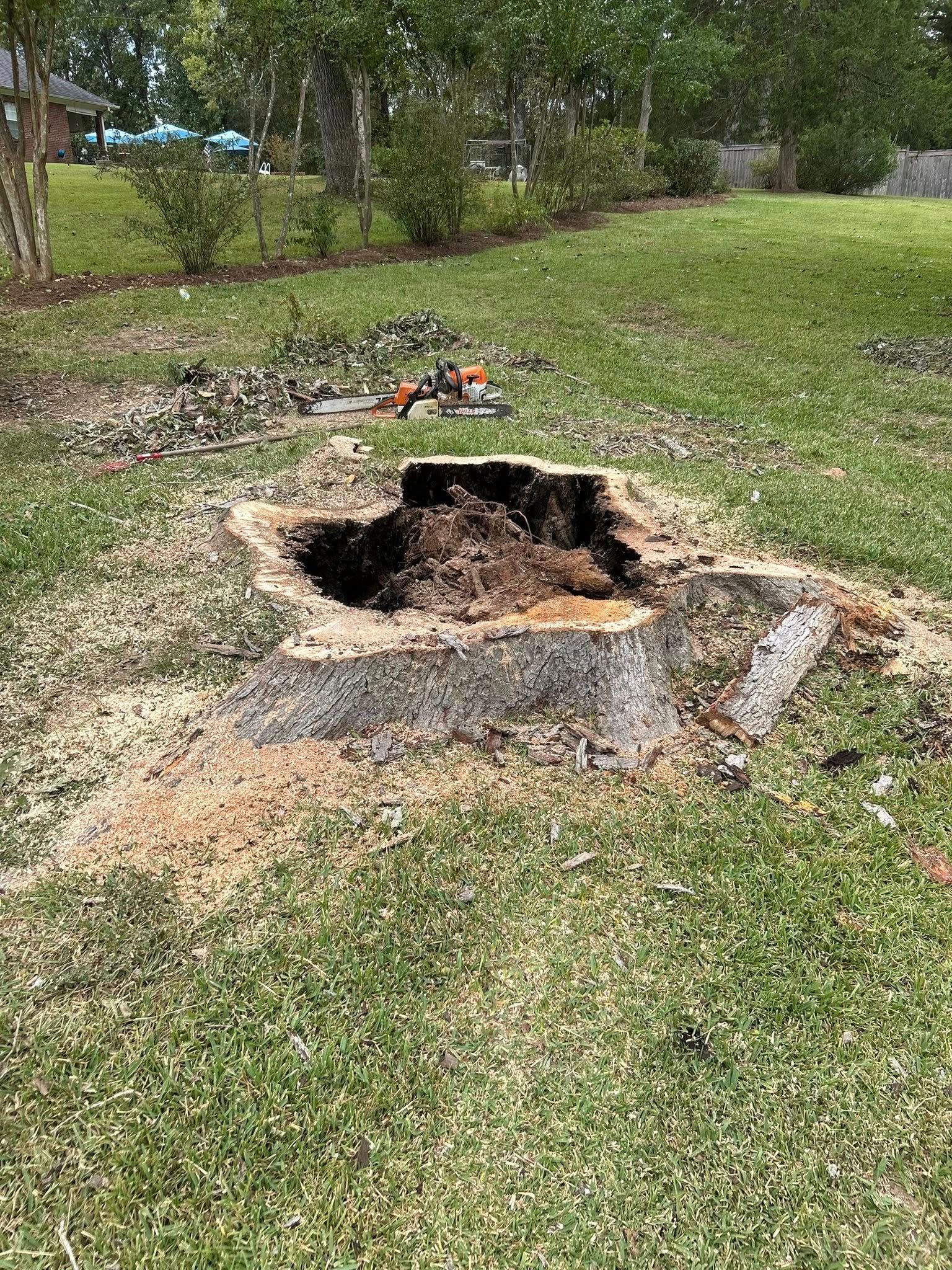
Leftover stumps create obstacles during mowing, detract from curb appeal, and send up persistent shoots that require repeated cutting across Flowood properties. Grinding eliminates visible stumps while minimizing disruption to surrounding grass, flower beds, and landscape features. The process uses specialized equipment that reduces stumps to wood chips below ground level, preventing regrowth and removing the tripping hazards that stumps create in high-traffic areas.
Grinding equipment grinds the stump and root crown several inches below the soil surface, which stops new shoots from emerging and allows grass seed or sod to establish roots in the area. This approach avoids the extensive digging required for full stump extraction, leaving lawns intact and ready for immediate replanting or landscaping installation.
Schedule professional stump grinding services to remove obstacles and prepare your property for landscaping improvements.
Why Grinding Works for Stump Removal
The grinding process uses rotating cutting teeth that chip away the stump incrementally, reducing it to mulch-like wood chips that can be spread onsite or hauled away depending on your plans for the area. Depth is adjusted based on whether you're planting grass, installing hardscaping, or preparing the site for construction that requires deeper root removal.
Once grinding finishes, you'll see level ground where the stump previously stood, with wood chips filling the depression left by the removed stump. Lawn mowers pass over the area without hitting hidden wood, and landscaping projects proceed without working around protruding stumps that complicate planting beds or irrigation installations.
Crews work around existing plants and irrigation systems, targeting only the stump and immediate root structure without disturbing nearby landscaping. Grinding also eliminates the pest activity common in decaying stumps throughout Mississippi, where termites and carpenter ants colonize rotting wood before spreading to healthy trees and wooden structures nearby.
Questions Before Starting Your Project
Homeowners and businesses throughout Central Mississippi often have similar concerns about the grinding process, what happens to the wood chips, and how the service affects surrounding landscaping before scheduling removal.
What happens to the wood chips produced during grinding?
Wood chips are spread as mulch around landscaping, mixed into the soil to fill the depression left by the stump, or hauled away completely if you prefer a clean site ready for immediate grass planting or hardscaping installation.
How does grinding prevent stumps from sending up new shoots?
Grinding removes the stump below the soil surface and destroys the growth points in the root crown, eliminating the tree's ability to produce new shoots that would otherwise require repeated cutting during lawn maintenance.
When should I grind stumps after tree removal?
Grinding can happen immediately after tree cutting or months later, though faster removal prevents pest colonization and makes lawn care easier by eliminating obstacles that mower blades hit or that require trimming around during regular maintenance cycles.
Will grinding damage nearby plants or underground utilities?
Experienced crews assess the site beforehand and use equipment that targets only the stump and immediate root crown, avoiding irrigation lines, utility cables, and established plantings within several feet of the grinding area.
Why do stumps in Flowood attract so many pests?
Mississippi's humid subtropical climate accelerates wood decay, creating moist conditions inside stumps that attract termites, carpenter ants, and wood-boring beetles that eventually move from decaying stumps to healthy trees and wooden structures nearby.
D.A.T's Tree Work removes stumps efficiently with reliable cleanup and experienced service crews across Central Mississippi. Arrange a consultation to discuss stump grinding options and receive a free estimate based on stump size and site conditions.